- Girlhood
- Posts
- Is the "Soft Girl" Era Making Us Soft?
Is the "Soft Girl" Era Making Us Soft?
Plus, Endo Just Got a Long-Overdue Diagnosis Upgrade
If you're new here, welcome to Girlhood — the group chat we should have had all along, where we talk openly about our bodies and the messy, funny, complicated parts of being a woman. This week: a post-birthday audit, four to eleven years of being dismissed, a research rabbit hole, and a hard question about the “soft girl” era. Let's get into it.
Hi friend,
Every year around my birthday, I do this thing where I take stock — not in a vision-board way, more like a slightly uncomfortable look at whether I actually am who I think I am.
I've always identified hard with my sign. Pisces: creative, intuitive, charismatic, sees the best in everyone to an occasionally inconvenient fault, toxically positive (if we're being honest about it). Co-Star, for their part, suggests my best career options include "amateur poet," "sad clown," and "orb of light," which honestly tracks more than I'd like to admit. All of it has felt true for so long that I stopped questioning whether it still fit, which is probably its own kind of Pisces behavior.
Here's the thing about Pisces, though: it's two fish swimming in opposite directions, the whole symbol built around contradiction. And lately, looking at the people closest to me — my husband, most of my good friends, basically an unintentional Pisces support group I never formally organized — it's obvious we share a sign and almost nothing else. He's internal where I'm external, Type A to my Type B, same birthday season, completely different operating systems. At some point, astrology stops explaining it and you just have to accept that people are who they are, sign or no sign.
What it's made me think about is labels more broadly: how we pick them up young, wear them long enough that they start to feel like fact, and then one birthday you look around and realize the label was never the whole picture. Just the part that was easiest to explain.
The older I get, the less I fit the story I've been telling about myself — and honestly, that feels like exactly where I'm supposed to be.
💌 Can’t find Girlhood in your inbox?
Check Spam or Promotions, drag us back, then add [[email protected]] to your contacts and ⭐ it, so we always land right where we belong.
🤯 Endometriosis: Four to Eleven Years of Being Told “It’s Fine”
Every day, without fail, a version of the same search lands in Rescripted's data: why are my period cramps so bad, is this amount of pain normal, can't get out of bed during period. Millions of women, typing the same quiet desperation into a search bar (at what I can only assume is 2 a.m.), hoping someone on the other side finally has an answer.
Here's the thing: for a lot of them, it's not just bad cramps. It's endometriosis, a chronic condition where tissue similar to the uterine lining grows outside the uterus, causing pain that can be genuinely debilitating. And according to new clinical guidance just released by ACOG, people are waiting between four and eleven years on average from the onset of symptoms to an actual diagnosis. Four to eleven years of heating pads, Advil, and being told, in one way or another, that this is just how periods are.
It's not.
What makes this guidance feel significant — and it is significant, because this is new guidance that, for the first time, focuses specifically on diagnosis — is that it gives clinicians permission to stop waiting for surgery to confirm what a patient's symptoms are already saying. A clinical diagnosis, based on history and physical exam, is now explicitly supported. Which means treatment can start faster. Which means women don't have to keep suffering through month after month while the system gets around to believing them.
March is Endometriosis Awareness Month, which is usually when the infographics appear and then disappear. But I keep thinking about all the women in our community who are still in the middle of that wait — still wondering if they're being dramatic, still being dismissed.
You're not. The system just took eleven years to say so.
🔍 Ask Clara: What are the signs & symptoms of endometriosis?
When buying something for yourself (like skincare, fitness, or wellness), how much does price influence your decision?Everyone approaches spending a little differently — help us understand what influences yours! |
📖 What Christina Applegate's Book Made Me Google
As someone with an autoimmune condition (hi, Hashimoto's, the gift that keeps on giving), I'm obsessed with the research connecting what happens to us emotionally — especially early in life — to what eventually shows up in our bodies.
I came across this Norwegian study while listening to Christina Applegate's new memoir, You with the Sad Eyes. She trauma dumps — freely and without apology — and somewhere in the middle of it, I couldn't stop thinking: what if these things aren't separate stories?
Turns out, researchers are asking the same question.
The study followed nearly 78,000 women and found that childhood sexual or emotional abuse was associated with a significantly increased risk of developing multiple sclerosis. Women who experienced sexual abuse had a 65% higher risk. Those exposed to all three types of abuse (sexual, emotional, and physical) had a 93% higher risk.
The body keeps running a stress response that was never supposed to be permanent, and then everyone acts surprised when it shows up as something.

Women are already underdiagnosed and underbelieved in medicine. Add a trauma history, and suddenly symptoms become anxiety, stress, and "have you tried therapy?" The idea that the stress response to trauma could be a biological MS risk factor doesn't just tell us something about the disease; it tells us something about why women's pain gets dismissed for so long.
Most of us have spent years wondering what our bodies were trying to tell us. Some of us are still finding out.
🔍 Ask Clara: When does MS typically show up in women?
📬 Your friend’s cool for forwarding this, but don’t wait — subscribe to Girlhood, and get the real talk delivered straight to your inbox first. And for conversations that happen in the moment, join our WhatsApp community to connect with other women who get it.
🛏️ Is the "Soft Girl” Era Making Us Soft?
There's a video circulating that I haven't been able to stop thinking about. It's a critique of the "soft girl” era — the aesthetic of candles, nervous system regulation, protecting your peace, saying no, slow mornings, and the general pressure to do less of anything that might cause discomfort.
And the question it asks is a good one: in our collective rush to calm down, are we losing something?
I'll be honest. I've been fully enrolled. I traded HIIT for Pilates. I drink my coffee before breakfast in the morning to avoid cortisol spikes. And I do think a lot of it is legitimate — women in particular have spent generations absorbing stress that was never ours to carry, and learning to set it down is not weakness.
But there's a version of this that has gone sideways.
When "protecting your peace" becomes a reason to avoid hard conversations, hard work, hard feelings — when the nervous system becomes a permanent excuse rather than something you're actually healing — that's just avoidance. And somewhere along the way, avoidance got a really good PR team.
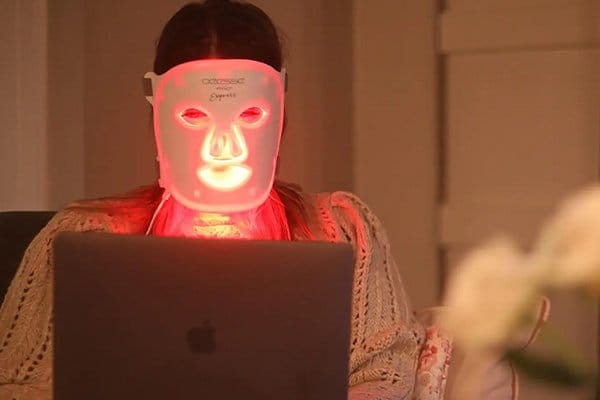
Pushing through hard things isn't the opposite of healing. Some things are just supposed to be hard (ahem, parenting), and you don't find out what you're made of by opting out of them. The soft era, taken too far, quietly tells women to shrink... just in pastel, with a red light mask on.
We can regulate our nervous systems and still be in the arena. Some of us don't have a choice.
xo,
Kristyn
🔍 Ask Clara: How does Pilates help with stress reduction?


Reply