- Girlhood
- Posts
- Learning to Let People Not Be “My People” 👭
Learning to Let People Not Be “My People” 👭
Plus, The Postpartum Chapter That Doesn’t Make the Baby Books
If you’re new here, welcome to Girlhood, the group chat we should have had all along — where we talk openly about our bodies, the questions we whisper about, and the everyday moments that make us pause, laugh, or rethink life. It’s everything you’re feeling, but didn’t know how to say. Let’s dive in!
Hi friend,
Lately, I’ve been thinking a lot about how the energy we put out has a way of circling back. So when I came across a reel the other night that honestly spoke to my soul, it felt… timely. Jolie Steel was talking about how you can accomplish “damn near anything you want,” but how you go about it matters just as much as getting there.
You can push, force, hustle, control — all fear-based — and yes, you might reach your goal. But you won’t feel calm once you arrive. You’ll still be gripping everything tightly, waiting for something (anything) to go wrong.
Or you can move through life with trust — opening, allowing, receiving, believing things will come together without micromanaging the universe. And when you get there from that place, you actually get to enjoy it. That idea hit me in all the right places.
A little while later, I stumbled on a TikTok from Lucie Fink about how her mom used to tell her, constantly, “You’re so lucky. Good things just happen to you.” Even about the tiny things. And how that shaped her whole attitude, not because her life was perfect, but because she learned to expect that good things would find her.

It made me think about my own default settings. I’ve always been a positive person. I joke that I wear rose-colored glasses when it comes to other people, but it’s true: I look for the good. And I don’t plan on losing that part of myself. Infertility, and losing one of my best friends to breast cancer, taught me that life can be brutal… and somehow still full of bright spots, even in the darkest moments.
For me, it really comes down to this: the energy you put out tends to be the energy you get back. And I’m choosing to keep putting out something hopeful.
💌 Can’t find Girlhood in your inbox?
Check Spam or Promotions, drag us back, then add [[email protected]] to your contacts and ⭐ it, so we always land right where we belong.
📺 Another Decision for Parents Who Can’t Even Pick a Show
This week, ACIP (the CDC’s vaccine advisory panel) voted 8–3 to change the long-standing guideline that all newborns receive the Hepatitis B vaccine at birth. If the baby's mother tests negative for Hep B, the shot is now categorized as “shared decision-making.” Translation: parents and providers will decide together whether to give it in the hospital or delay it.
My first reaction was immediate and visceral: If this decision had been handed to me in those first 24 hours postpartum, I would’ve spiraled. I remember lying in that hospital bed after my twins were born — exhausted, stitched, overwhelmed, trying to make sense of what had just happened to my body and my life. If someone had asked, “Do you want the Hep B vaccine now or wait?” I wouldn’t have had the capacity to process the question, let alone the risk.

But here’s why the birth dose existed in the first place. Since the early ’90s, universal newborn vaccination has helped drive childhood Hep B infections down by roughly 99%. The vaccine is extremely effective when given within 24 hours, and infants who contract Hep B are far more likely to develop lifelong chronic infection, which can lead to liver disease and cancer. Screening helps, but it isn’t perfect — infections can be missed, acquired later in pregnancy, or come from household contacts.
The American Academy of Pediatrics responded almost immediately, reaffirming that the birth dose is still the safest, most effective way to protect infants, emphasizing that chronic infection is far more likely when the vaccine is delayed. In their words: timing matters.
That’s what made the birth dose a safety net. A simple, predictable layer of protection.
Now? Parents may get different answers depending on the hospital, the provider, or the philosophy of the moment. And that feels less like choice and more like pressure, especially for people who are already depleted, hormonal, and trying to keep a tiny human alive.
If you’re expecting, consider asking about Hep B before delivery, when your brain is still functioning. And ask directly: “What’s the actual risk of delaying this?” Their answer might tell you more than the policy does.
🔍 Ask Clara: What are some pregnancy-safe acne treatments?
📬 Your friend’s cool for forwarding this, but don’t wait — subscribe to Girlhood, and get the real talk delivered straight to your inbox first. And for conversations that happen in the moment, join our WhatsApp community to connect with other women who get it.
🧠 The Postpartum Chapter That Doesn’t Make the Baby Books
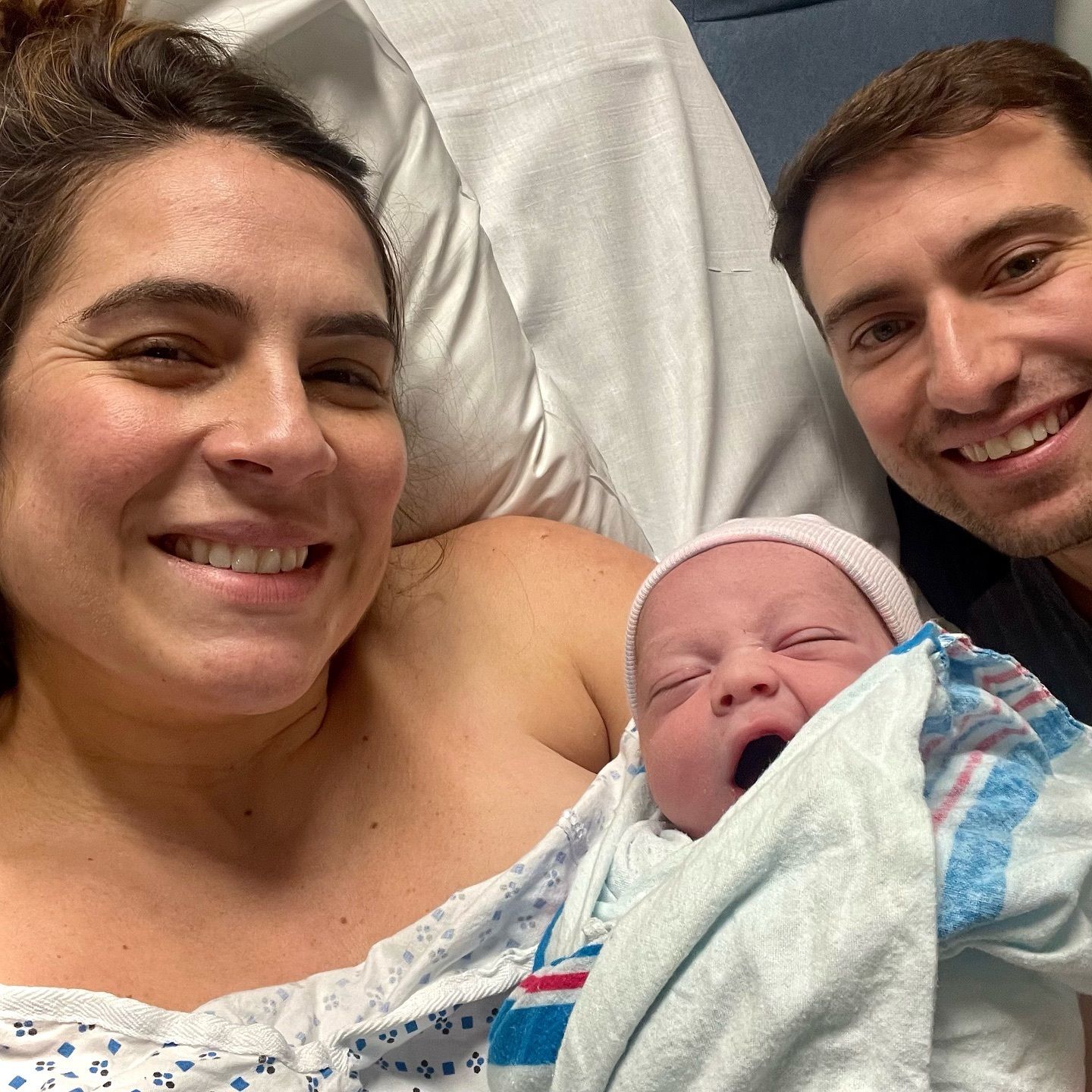
I like to joke that my postpartum experience with the twins was “a lot,” but honestly, that doesn’t even scratch the surface. A vaginal birth with Twin A, a C-section with Twin B, and a postpartum period that brought more challenges than I expected — physically, mentally, and emotionally — it was the kind of initiation into motherhood that changes your brain chemistry in ways you don’t fully understand until much, much later.
So with my third baby (who somehow turns one next week!), I thought I might finally get a simpler recovery. And in many ways, I did. No intense, overwhelming moments, no medical emergencies. I felt strangely… okay.
Until postpartum brain fog showed up.
And not the occasional forgetfulness; the kind where focus feels slippery, words disappear, and everyday tasks require way more effort than they should. As someone whose mind moves a while a minute, I’m no stranger to misplaced thoughts, but this was different. My usual quirks suddenly had layers I couldn’t explain.
The science actually does explain it, though. After birth, estrogen and progesterone levels drop rapidly, and both hormones influence cognition and mood regulation. Sleep fragmentation disrupts the prefrontal cortex, the part of the brain responsible for planning, memory, and attention. And pregnancy, birth, and breastfeeding can deplete nutrients like DHA, choline, B vitamins, and iron, all of which support neurotransmitter function and mental clarity.
That’s why I started Needed’s Cognitive Support. It’s built around nutrients and botanicals that actually support cognition postpartum, especially when you’re dealing with hormone shifts, sleep loss, and, in my case, ADHD. It includes Alpha-GPC, a bioavailable choline source for memory and attention; Sensoril® ashwagandha to help regulate occasional stress when sleep is fragmented; Bacopa monnieri to support memory and processing; CognatiQ® coffee fruit extract, a stimulant-free ingredient shown to support cognitive performance; and phosphatidylserine, which helps maintain healthy brain cell function. For me, it hasn’t been a dramatic before-and-after — just a steadier, more accessible version of my brain on the days I need it most.
I’ve loved Needed’s products for years and truly depend on them, which is why I’m so excited to finally be partnering together. If you’re thinking about trying them, use my code GIRLHOOD20 for an extra 20% off your first purchase. It even works on subscriptions and already discounted plans!
If you're in the thick of it, remember this: postpartum brain fog is real, it’s common, and it does lift... even if you need a little bit of help to get there.
🔍 Ask Clara: Why does postpartum brain fog happen?
💸 Your Voice Matters — and Yes, You’ll Be Paid! 💸
Want to share your perspective… and get paid for it? We’re building a team of women whose experiences, attitudes, perceptions, wants, and needs will help drive innovation across the women’s health and wellness industry.
👉 Join our team here.
From there, we’ll reach out with paid opportunities that align with your background and interests.
Thank you for being here, and for lending your voice to help improve the health journey for women everywhere. 💜
👭 Learning to Let People Not Be “My People”
It’s taken me 36.75 years to realize that not everyone has to be my cup of tea. Which, if you know me, feels almost groundbreaking. I should start by saying: I’m a Pisces. I generally assume I’ll get along with most people, and honestly, I usually do.
I’ve never been someone with a huge group of best friends — I get along with many, but I’m close with a select few. Still, there are very few people in this world I genuinely struggle to have a conversation with.
And yet, last week at a holiday party, I met someone where… it just wasn’t landing. The small talk felt effortful. The energy was off. And of course, instead of just moving on with my life, I spent the next 48 hours replaying every interaction like I was studying game tape.
Was I awkward? Did I misread the whole thing? Why is this bothering me so much?

Somewhere around Sunday night, it finally clicked: it’s okay if I don’t connect with everyone. It doesn’t make them wrong. It doesn’t make me wrong. It just means we’re not each other’s people, and that's allowed.
But for someone who’s spent most of her life trying to be approachable, warm, and easy to talk to, that realization felt like unlearning a very old reflex — the belief that if the vibe is off, I must have caused it. When really, sometimes two humans just aren’t a fit. No drama, no deeper meaning, no character flaw to investigate.
Protecting my energy, I’m learning, means accepting that not everyone will get it (or me). And that maybe nothing has to be “wrong” for two people not to click. A reminder that not every interaction deserves a postmortem, and not every mismatch needs fixing.
xo,
Kristyn
💌 A Newsletter For My Fellow Book Girlies
As someone who always has at least three books on my nightstand (and, fine, another two in my tote), I have to share a newsletter I genuinely love: Read a Girl.
Each month, it spotlights one standout book by a female writer — short, thoughtful recs that feel like getting a perfectly timed suggestion from a friend who knows your reading habits a little too well. It also intentionally champions voices that don’t always get the attention they deserve, which is one of my favorite things about it.
If you’re looking to refresh your reading list, you can subscribe — and browse the full archive — here.
📖 What I’m Reading: Margo’s Got Money Troubles by Rufi Thorpe
.jpg)

.jpg)

Reply