- Girlhood
- Posts
- My Most Boring Habit Is Finally Paying Off 👏
My Most Boring Habit Is Finally Paying Off 👏
Plus, Living to Eat (with a Little Help from ChatGPT)
If you’re new here, welcome to Girlhood — the group chat we should have had all along, where we talk openly about our bodies and the everyday moments that make us pause, laugh, or rethink life. This week: the table we gather around, the things we can’t ignore, the rest we’ve stopped feeling guilty about, and the small hill I’m choosing to die on for my 37th birthday. Let’s dive in!
Hi friend,
They say some people eat to live, while others live to eat. As a second-generation Italian-American girl from Queens, I have always, proudly, lived to eat. Food is how we say "I love you" without actually saying it. It's Sunday sauce simmering for hours, it's too much bread on the table, it's arguing about whose meatballs are better.
"Nothing tastes as good as skinny feels" has, quite frankly, never resonated with me. Carbs are a personality trait where I'm from.
But here's the part that might surprise you: for most of my adult life, I didn't love to cook. I loved eating, I loved restaurants, I loved being cooked for, but the actual act of planning, prepping, and executing dinner on a random Wednesday when you have three kids, a full-time job, and approximately zero mental bandwidth left felt… exhausting.
And then, honestly, ChatGPT changed the game.
Now I type in what's in my fridge ("chicken thighs, San Marzano tomatoes, half an onion, a sad piece of pancetta"), and I get a straightforward, no-frills recipe in seconds. No life story, no ads, just clarity, which removes the friction and means I actually cook.
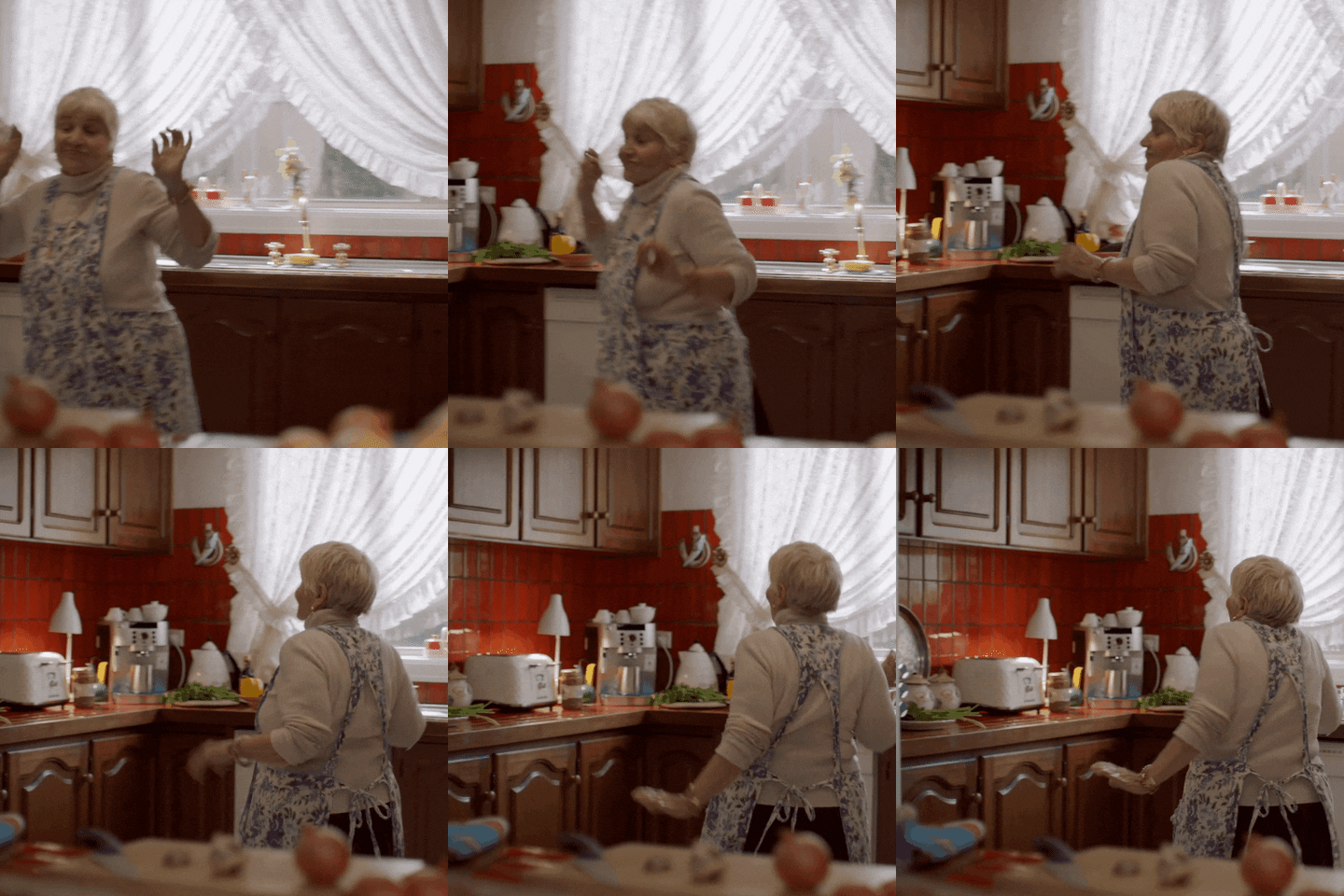
And here's what I didn't expect: I love what happens while I'm cooking. Not the chaotic, multitasking version, but the steadier one: audiobook in my ears (hi, Wild Reverence), hands moving, knife hitting the cutting board in a rhythm that somehow settles my nervous system. I don't even particularly love chopping, but I love how it quiets my brain while I'm doing something useful — something that ends with everyone gathered around the table.
For me, this isn't about being a trad wife or optimizing protein. It's about reconnecting to something that's always been part of my identity — food as joy, food as love — in a way that finally fits into my actual life. And realizing that maybe in your late 30s, you just become the nonna, whether you planned to or not.
🔍 Ask Clara: What are the health benefits of cooking at home?
💌 Can’t find Girlhood in your inbox?
Check Spam or Promotions, drag us back, then add [[email protected]] to your contacts and ⭐ it, so we always land right where we belong.
💔 The Screening I'm Not Putting Off Anymore
They say death comes in threes, but lately it feels less like superstition and more like a pattern I can’t unsee. And the cause, in so many of these losses, is colon cancer.
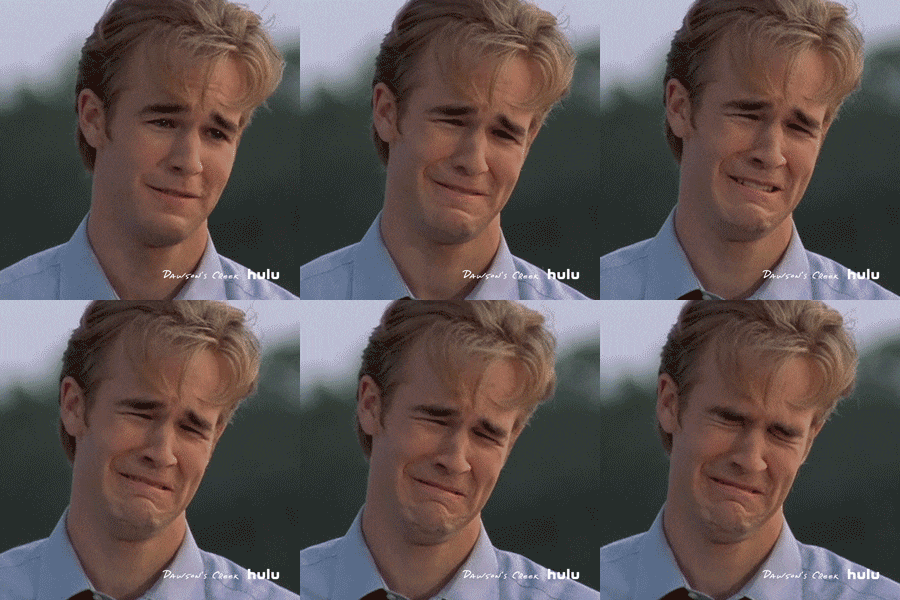
First, the headlines linking colon cancer to Catherine O’Hara (RIP, Moira Rose). Then James Van Der Beek — yes, our Dawson, forever standing on that dock in my teenage memory — opening up about his diagnosis before his recent passing. And then the one that truly knocked the wind out of me: my mom’s best friend Nancy, who felt more like an aunt, gone far too soon from the same disease.
I kept asking myself: Is this actually happening more, or are we just at the age where it starts touching our own lives?
According to the American Cancer Society's latest report, colorectal cancer rates in adults under 50 have been rising since the mid-1990s. It’s now the leading cause of cancer death in men under 50 and the second leading cause in women in that age group. That’s a staggering shift for something many of us still think of as a “later in life” diagnosis.
Researchers are still untangling why. Diet, ultra-processed foods, sedentary habits, microbiome changes, environmental exposures. Likely a mix. What we do know is practical: screening now starts at 45 for average-risk adults because of this rise. And symptoms matter, even if you feel healthy. Blood in the stool. Ongoing digestive changes. Unexplained weight loss. You’re not dramatic for getting it checked out.
Lately, beneath the carpools and grocery runs and half-finished emails, there’s this heightened awareness of how fragile it all is, how ordinary and precious these days can be at the same time.
So yes, plan the trip, celebrate the birthday, stay up too late with your friends, and order the good bottle of wine. But also call your doctor, know your family history, and schedule the screening you’ve been putting off.
Two things can be true at once: life is precious and unpredictable, and protecting it is part of loving it.
📬 Your friend’s cool for forwarding this, but don’t wait — subscribe to Girlhood, and get the real talk delivered straight to your inbox first. And for conversations that happen in the moment, join our WhatsApp community to connect with other women who get it.
💤 The Sleep Era Is Upon Us (and I Was Born Ready)
Somewhere between the protein obsession and the cold plunge discourse, sleep quietly became the coolest thing you can do for your health. And honestly? It's about time.
Bustle recently ran a piece on sleep tips from Olympic athletes — the people whose entire careers depend on physical recovery — and what struck me wasn't how extreme their routines were. It was how unsexy most of the advice was. Consistent bedtimes. Dark rooms. No screens. The boring stuff, done with unusual commitment.
I have been doing the boring stuff, and I will not be entirely humble about it: my Oura ring recently gave me a 97% sleep score. In my family, this is not surprising. We are, all of us, gifted sleepers: the kind of people who can fall asleep anywhere, at any time, under any conditions. It's less a wellness practice and more just how we're wired. My contribution to the family legacy is simply that I go to bed and wake up at the same time every day. That's genuinely the whole routine.
And I think that's kind of the point.
We’ve spent so long treating sleep as the thing you sacrifice to prove you’re serious: about work, about ambition, about being the kind of person who has a lot going on. Hustle culture turned exhaustion into something aspirational. “I’ll sleep when I’m dead” was said out loud, by adults, as if that were a flex and not at least a little concerning.
Meanwhile, the research keeps piling up. Sleep shapes cortisol, immunity, appetite, and emotional regulation. Even Olympians talk about it now not as indulgence, but as infrastructure. What I notice most, though, is simpler than any data point. I’m steadier when I’m rested. Kinder. Slightly less reactive in the group chat.
I don’t have an elaborate wind-down routine. I just keep my bedtime. The ring doesn't lie.
🔍 Ask Clara: How much sleep do women actually need?
💸 If you’ve ever thought, “Why doesn’t women’s health work better than this?” — this is your chance to shape it (and yes, you’ll be paid). 💸
We’re building a team of women whose experiences, attitudes, perceptions, wants, and needs will help drive innovation across the women’s health & wellness industries.
👉 Join our team here.
From there, we’ll reach out with paid opportunities that align with your background and interests.
Thank you for being here and for lending your voice to help improve the journey for women everywhere. 💜
🧠 ADHD and the Six-Digit Code
Today is my 37th birthday, and if I could have one gift — no wrapping required — it would be a small reprieve from two-factor authentication.
I know. Cybersecurity. Identity theft. I’ve heard the arguments. I’m not unreasonable. I just also have ADHD, which means the gap between “your code has been sent” and me actually locating my phone, unlocking it, finding the text, reading the six digits, switching back to the original app, and entering them before they expire is… not always a gap I can close in time.
I have requested new codes while the original codes were still technically valid. I have, on at least one occasion, given up entirely and decided that whatever bill it was could wait until a more focused version of me showed up.
This isn’t laziness; it's a working memory thing. ADHD brains genuinely struggle to hold information across interruptions, which is, unfortunately, the entire premise of two-factor authentication. You disengage, reorient, hold the number in your head, switch back, and somewhere in that shuffle, the thread is gone. The code has expired. You’re back at square one.
There’s a specific kind of ADHD tax nobody talks about much: not the big, dramatic stuff, but the thousand tiny friction points that make ordinary life feel slightly harder than it looks from the outside. Two-factor authentication just happens to be the hill I’m choosing today, mostly because birthdays have a way of making you notice where your energy goes.
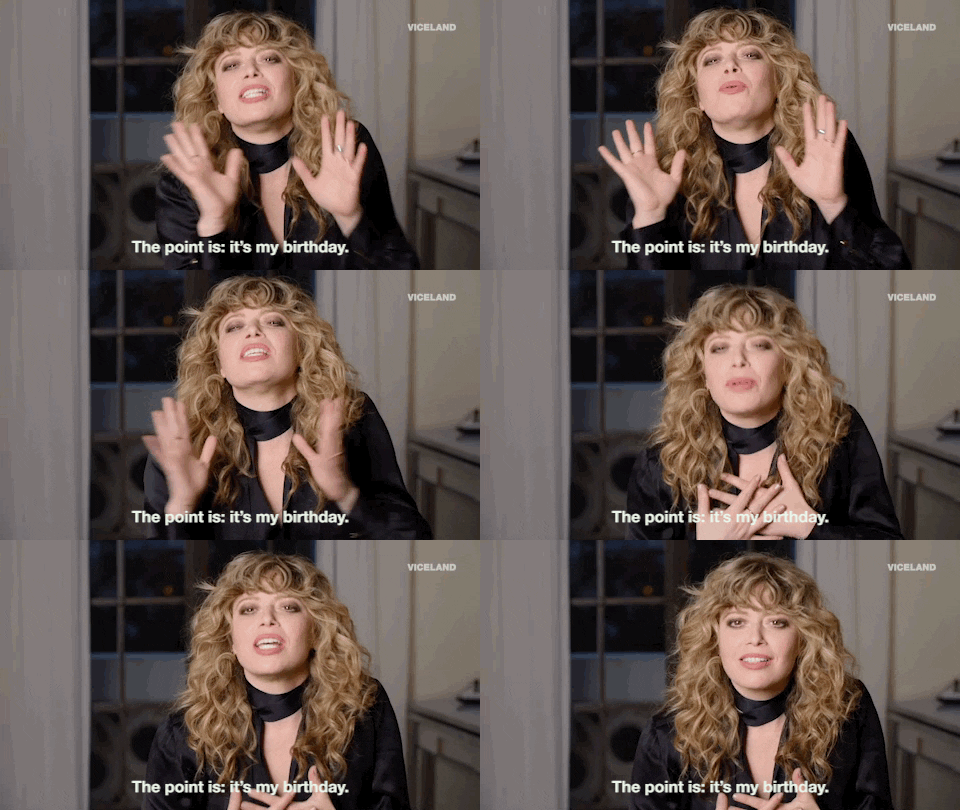
Thirty-seven feels like the age where you’re allowed to say that out loud. So, happy birthday to me. Please send cake. And for the love of God, just let me log in.
xo,
Kristyn
🔍 Ask Clara: How can I better manage everyday life with ADHD?
Quick vibe check on today's issue 👇🏻 |


.jpg)
.jpg)
Reply